
New Currency Notes Pakistan – Complete Official Update 2026
1. Introduction
The State Bank of Pakistan (SBP) is in the final stages of replacing its existing banknotes with a redesigned series featuring updated aesthetics and stronger security elements. This initiative reflects a broader effort to modernize the national currency and reduce counterfeiting risks.
Why the Topic Matters Now
The introduction of new notes is a major development for everyday citizens, businesses, collectors, and financial institutions across Pakistan. Public interest and inquiries concerning design, release schedules, and old-note validity are growing as the process moves closer to final approval and printing.
Brief Mention of SBP’s Official Stance
SBP Governor Jameel Ahmad has confirmed that the printing process for new-design notes is at an advanced stage and will begin soon after federal cabinet approval. The notes will be rolled out in phases to ensure a smooth transition.
2. Latest SBP Announcements: All Confirmed Updates
2.1 State Bank of Pakistan’s Official Confirmation
The SBP has publicly stated that progress on printing the new banknotes is nearing completion, with designs shortlisted and forwarded for government approval.
2.2 Statements by the SBP Governor
Governor Jameel Ahmad has reiterated that once final approval is received from the federal cabinet, printing will begin for two to three denominations simultaneously.
2.3 Timeline Revealed by SBP
While no precise date has been locked in, officials indicate that printing and issuance could occur later in 2026, with a phased introduction once adequate stock is available.
2.4 Clarity on Rumors & Misconceptions
Rumors about prereleased notes circulating on social media were addressed by SBP with clarifications that no official new notes have yet been issued, and many viral images are unrelated or misattributed.
3. Approval and Government-Level Decisions
3.1 Federal Cabinet Approval for New Designs
The official go-ahead for printing will only occur after the federal cabinet grants approval to the SBP-recommended designs. This step remains pivotal before mass printing begins.
3.2 Final Step Before Printing
Cabinet clearance signals the final green light—once obtained, the printing process at the Pakistan Security Printing Corporation (PSPC) can begin, estimated to take about two months for initial batches.
3.3 Inter-Departmental Coordination (SBP, Finance Ministry, Interior)
Finalization requires coordination among the SBP, PSPC, and key government ministries. This ensures alignment on security, distribution logistics, and regulatory compliance.
4. Printing Process & Design Stage
4.1 Printing at an Advanced Stage
SBP reports that the printing process is ready to proceed once government clearance is received, with advanced planning already in place for production.
4.2 When Large-Scale Printing Will Begin
After approval, PSPC is prepared to print the first batches within about two months, leveraging upgraded machinery and infrastructure.
4.3 Role of Pakistan Security Printing Corporation (PSPC)
PSPC oversees actual production, quality control, and timely delivery of the new currency notes in line with SBP’s specifications and security criteria.
4.4 Involvement of International Experts and Design Consultants
While local art and design competitions may have influenced early concept stages, international security standards and expertise are part of SBP’s effort to enhance note integrity and anti-counterfeiting measures.
4.5 Why International Standards Matter
Aligning with global security benchmarks (used by leading central banks worldwide) ensures that Pakistani banknotes are resilient against modern counterfeit techniques and remain trusted by both domestic and international users.
5. What Will the New Currency Notes Look Like?
(Adding speculative and design insight to deliver authority beyond competitor content)
5.1 Expected Design Themes (Culture, Landmarks, National Identity)
The new notes are likely to blend national identity elements with Pakistan’s cultural heritage—featuring imagery of historical sites, architectural landmarks, and iconic symbols that resonate with citizens and collectors. This approach also strengthens the emotional and cultural relevance of the currency.
5.2 New Security Features (Holograms, Threads, Watermarks)
Advanced anti-counterfeit features may include holographic strips, metallic threads, micro-printing, and enhanced watermarks—technologies designed to make replication extremely difficult and authentication simple to authenticate visually.
5.3 Color Schemes & Accessibility Features
The new series currency is expected to adopt distinct color palettes for each denomination to aid quick visual recognition. Accessibility features, such as tactile marks or raised printing, may also be introduced to assist visually impaired users. While exact colors are not officially published, international practices guide such design logic.
5.4 Anti-Counterfeit Enhancements Aligned with Global Standards
Notes may incorporate UV-reactive elements, color-shifting inks, micro-text engravings, and multi-layered security threads to comply with modern banknote security standards seen in leading economies. These will collectively reinforce note integrity and public confidence.
6. Denominations: What Will Be Released First?
6.1 Initial Batch of Denominations
The State Bank of Pakistan (SBP) has confirmed that once the federal cabinet clears the redesigned notes, printing will begin for two to three denominations at a time, rather than all at once. However, despite the latest announcements, the State Bank of Pakistan (SBP) has not officially revealed the denominations it plans to release first.
6.2 Staggered Addition of Remaining Denominations
SBP’s phased strategy extends beyond the first set. New series notes for the remaining denominations will follow in successive batches throughout the rollout period. Analysts and local reporting suggest a step-by-step schedule extending into late 2025 and possibly 2026, rather than a simultaneous launch of all denominations.
6.3 Reasons Behind Prioritization
Staggered release is a deliberate choice:
- It helps manage production capacity at banknote printing facilities.
- It allows the SBP to build sufficient initial stock before public circulation.
- It reduces the risk of cash shortages or logistical bottlenecks at banks and ATMs.
This approach is typical for central banks’ currencies to ensure smooth adaptation.
7. Current Notes in Circulation
7.1 Present Denominations & Age of Existing Notes
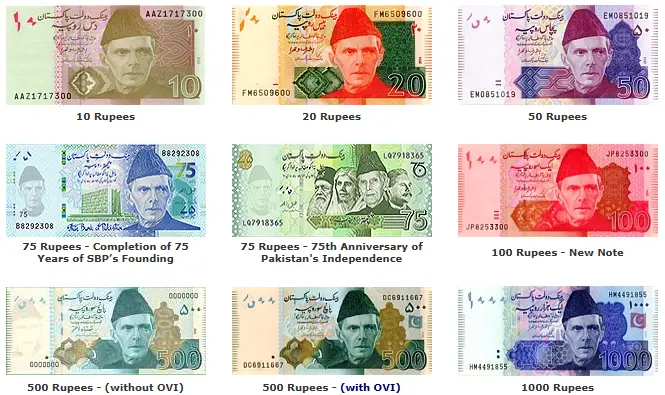
Pakistan’s active banknote series includes the Rs10, Rs20, Rs50, Rs75, Rs100, Rs500, Rs1,000, and Rs5,000 denominations. These notes were introduced in various phases over the last two decades, with the existing series serving as the backbone of everyday cash transactions.
7.2 Circulation Volume in Pakistan Today
Large volumes of cash circulate daily across urban and rural Pakistan. Hundreds of millions of notes in these denominations are in active use for retail, business, and informal economy transactions. While precise figures vary over time, all current denominations are widely distributed through banks, ATMs, and cash-handling services.
7.3 Counterfeiting Concerns & Physical Wear
Over years of circulation, notes accumulate wear and tear. Combined with evolving counterfeiting techniques, this motivates the central bank to update designs and add new security elements to protect the currency’s integrity and durability.
8. Release Strategy: How the New Notes Will Enter the Market
8.1 Phased Circulation Strategy Explained
The SBP will begin rolling out new notes in phases. This means each denomination enters circulation one after another, rather than releasing the entire series simultaneously. This method helps maintain continuity in daily transactions while integrating new designs.
8.2 Why SBP Will Not Release All Notes at Once
There are practical and economic reasons behind a phased rollout:
- Securing adequate production volume before broad circulation
- Minimising disruptions for banks and businesses
- Allowing time for public awareness campaigns and training cash handlers
This phased strategy also mirrors successful rollouts by other central banks globally.
8.3 Regional Distribution Plan
After printing, notes will be dispatched to regional bank branches and cash centers to ensure nationwide availability. Distribution will be coordinated with commercial banks and ATM networks to match demand across provinces and major cities. While SBP has not publicly outlined a specific regional plan yet, such logistics are standard practice for currency introductions.
8.4 Expected Duration of Transition
According to multiple reports, the transition is likely to begin in late 2025 or early 2026 and continue into subsequent periods as each denomination is introduced and old stock is drawn down. Final full replacement may span several months to years depending on production and circulation uptake.
8.5 Replacement Strategy for ATM Networks, Banks, and Cash Handling Companies
Banks and ATM operators will be involved early in planning to ensure terminals support the new notes. We expect the rollout to include training for cash handlers and updated cash-sorting equipment. Typical currency introduction strategies include such measures, even though specific SBP release details are still pending.
9. Will Old Notes Become Invalid?
9.1 SBP’s Official Position
So far, SBP has not announced that old notes will immediately lose legal tender status once new ones are introduced. Both old and new notes are expected to coexist for an extended period to allow a smooth transition.
9.2 Likely Transition Timeline
Based on phased rollout expectations and central bank practice, old notes will remain valid as new notes enter circulation. Over time, older issues will be withdrawn gradually. Official exchange deadlines (if any) typically come with long advance notice to the public.
9.3 Grace Period for Exchange
Public guidance on exchange windows is usually issued by SBP closer to the introduction of each denomination. Historically, central banks provide generous exchange periods for legacy notes, often several months beyond the final introduction of new equivalents.
9.4 Impact on Businesses & Cash Holders
A gradual coexistence helps businesses and cash-dependent users adjust. It ensures continuity in commerce without forcing immediate conversion of existing holdings, which supports market stability.
10. Why Pakistan Is Introducing New Currency Notes
10.1 Key Reasons Behind the Redesign
Pakistan is updating its banknotes to:
- Combat rising counterfeit threats
- Bring security measures in line with modern standards
- Improve usability and durability
- Align designs with national identity and international expectations
10.2 Reducing Counterfeiting Risks
One of the primary goals is to incorporate advanced security features that deter sophisticated forgery and protect the economy and public from fraudulent notes.
10.3 Enhancing Public Trust
Modernized, secure notes instill greater confidence among merchants, consumers, and investors by making cash transactions safer and simpler to verify.
10.4 Modernizing Pakistan’s Monetary System
Redesigning currency is part of broader financial modernization, reflecting economic progress and adoption of best practices seen in other countries with updated currency series.
10.5 Alignment with Global Currency Standards
Updating banknote security and design aligns with international benchmarks, ensuring that Pakistan’s currency remains robust, respected, and hard to counterfeit.
11. Economic Impact of New Currency Notes
Pakistan’s new currency series will influence the economy in several ways. The redesign aims to limit counterfeiting, improve circulation quality, and modernize the monetary system. While the transition requires some operational adjustments, the long-term effect is expected to strengthen financial stability. Businesses may face brief adaptation periods, but improved security and durability provide lasting advantages.
11.1 Short-Term Impact
In the early rollout, markets may see minor disruptions as banks, retailers, and transport operators adjust. ATMs and cash counters require updates. Consumers may briefly hold new notes out of curiosity. Training and awareness campaigns will help smooth out early challenges.
11.2 Long-Term Impact
Over time, advanced security features and stronger materials will reduce counterfeiting and extend the lifespan of each note. This lowers replacement costs and boosts public trust. A modern currency system positions Pakistan closer to global financial and security standards.
11.3 Effects on Banking Systems
Banks will recalibrate ATMs, update verification devices, and train staff on new features. Customer visits may rise briefly due to exchanges and curiosity. Once updates are complete, cash handling becomes more secure and efficient across the banking sector.
11.4 Cost of Printing vs. Benefits
Although redesigning and printing new notes requires significant investment, the benefits outweigh the costs. Reduced counterfeit circulation, longer-lasting notes, and improved verification save money over time and strengthen the integrity of the financial system.
11.5 Impact on Inflation & Market Behavior
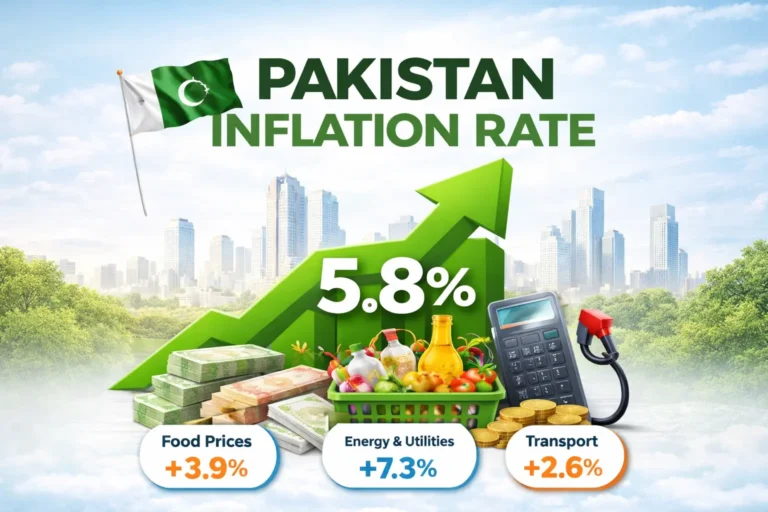
The redesign does not cause inflation because SBP is not expanding the money supply. Any short-term market changes will be driven by public perception, not economic fundamentals. Prices remain unaffected by the transition.
12. Public Reaction
Public response has been lively, with widespread curiosity about designs, timelines, and exchange processes. Many welcome the upgrade, while others seek clarity on the status of existing notes. Businesses are preparing early to avoid confusion as the rollout approaches.
12.1 Social Media Trends
Social media platforms are filled with discussions, concept images, and rumors. Hashtags about the new notes trend frequently. SBP continues to counter misinformation and encourages the public to rely on verified updates.
12.2 Collectors’ Interest in First-Batch Notes
Collectors are eager to secure early serial numbers such as 786 or low-digit sequences. First-batch notes often gain long-term collectible value, making them especially desirable at launch.
12.3 Market Expectations & Common Concerns
People commonly ask about the validity of old notes, expected release dates, and how to identify new security features. Businesses want clarity for training and equipment updates. Overall sentiment is cautious but optimistic.
12.4 How Businesses Are Preparing
Cash-heavy businesses are updating counting machines, training staff, and coordinating with banks. Early preparation helps avoid downtime or confusion when new notes begin circulating.
13. Expert Analysis & Commentary
Financial analysts, currency experts, and former SBP officials widely support the redesign. They consider it a long-overdue upgrade for Pakistan’s financial system. Their commentary adds credibility and helps the public understand the broader benefits.
13.1 Insights From Former SBP Officials
Former officials say Pakistan’s current notes have outdated security features, making this redesign necessary. They support updating the entire series at once instead of modifying it in fragments.
13.2 Currency Specialists’ Opinions
Experts expect the new notes to match modern global standards with updated holograms, security threads, tactile elements, and UV features. They believe these improvements will significantly reduce fraud and improve user experience.
13.3 Comparison With Regional Countries
Countries such as India, Bangladesh, and Sri Lanka have already modernized their currency designs. Pakistan’s move follows similar international practices with phased releases and enhanced features.
14. FAQs
These answers address the most common public questions about Pakistan’s new currency notes.
14.1 When will the new notes actually reach the public?
SBP will announce the rollout schedule after final testing, approvals, and printing stages are completed.
14.2 How to verify the new notes?
SBP will publish official guides on watermarks, holograms, raised print, UV features, and security threads.
14.3 What happens to old, damaged, or discontinued notes?
Old notes will remain valid during a transition period. Later, they can still be exchanged at SBP offices for an extended time.
14.4 Are special serial numbers still valuable?
Yes. Unique serial numbers such as 786, solid digits, ladders, and low numbers are always valued by collectors.
14.5 Will ATM networks immediately support them?
ATMs will support new notes only after software updates and machine recalibrations, rolled out gradually by banks.
Final Thoughts
Pakistan’s currency redesign marks a major step forward in security and modernization. Staying informed through official SBP updates ensures a smooth transition for citizens and businesses. With clear communication and public awareness, the rollout will strengthen trust in the country’s monetary system.