
Maryam Nawaz Ramzan Package Registration 2026: Complete Guide
Introduction
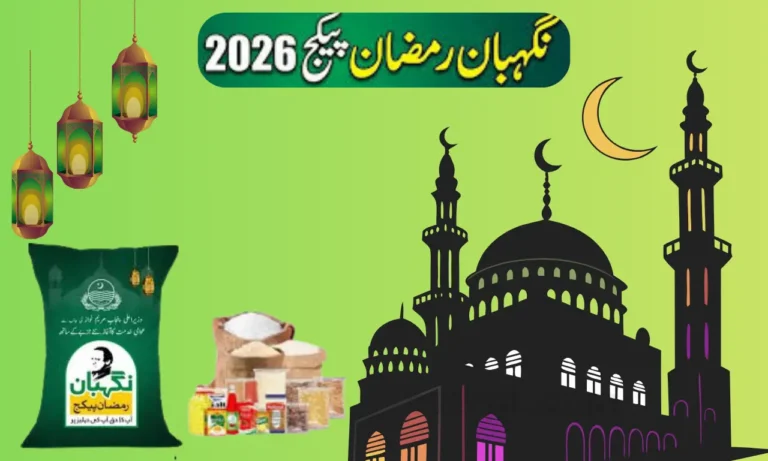
The Ramzan Nigehban Package is a government-backed initiative designed to provide financial and food support to low-income families across Punjab during the holy month of Ramadan. In 2026, this program aims to ensure that households facing economic challenges can celebrate the month with basic necessities and cash assistance.
The package was announced under the leadership of Maryam Nawaz, focusing on timely relief for deserving families. The program combines cash transfers through ATM cards and food packages to make support accessible and practical for all beneficiaries.
Families can expect to receive a fixed cash amount via a Nigehban ATM card along with grocery essentials. The system has been streamlined this year: ATMs and Rashan distribution points are synchronized with household data to ensure smooth delivery and verification.
Main Highlights of the 2026 Ramzan Nigehban Package
- Cash Support per Family: Each eligible household will receive a set cash amount credited to a Nigehban ATM card.
- Number of Beneficiaries: Millions of families across Punjab are included, ensuring widespread assistance.
- Shift from Rashan Bags to ATM Cards: While food packages are still available, the focus has moved to ATM cards for easier cash access.
- Cash Withdrawal Option: Families can withdraw money from any designated BOP ATM.
- Free Food Bag Option: Selected households will still receive grocery bags containing essential items.
- New Digital Verification Process: Household data is verified digitally via PSER to prevent duplication and errors.
- Household Data Matching: The system checks all families against the Punjab Socio-Economic Registry (PSER) for accuracy and eligibility.
This combination ensures the package is efficient, transparent, and reaches the right people.
What You Get in the Maryam Nawaz Ramzan Package 2026
- Cash Through ATM Card: Eligible households receive a fixed amount in their Nigehban ATM card, which can be used at banks or ATMs.
- Grocery Bag Items: Basic food essentials such as flour, sugar, rice, and cooking oil are included for families who opt for or are assigned food bags.
- Price Relief on Basic Goods: The program also ensures lower prices on select items during Ramadan to help families manage household expenses.
- Extra Support for Vulnerable Groups: Widows, disabled persons, and the elderly may receive additional assistance, ensuring the most vulnerable benefit from the program.
What’s New in 2026 (Compared to Previous Years)
- Nigehban Card System: This year introduces a fully digital Nigehban card system for cash distribution, replacing older manual methods.
- Card Activation Rules: Cards must be activated through designated ATMs, mobile apps, or field verification to prevent misuse.
- Tehsil Camp Sites: Localized distribution points at tehsil-level camps make it easier for families to receive their cards and food packages.
- Smartphone App Updates: A new mobile app allows tracking, activation, and verification, making the process more user-friendly.
- Biometric Checks in 2026: Fingerprint verification and other biometric measures help confirm identity and prevent fraud.
- Faster PSER Database Syncing: Household records are updated in real-time, reducing delays and errors in registration.
Who Is Eligible
Eligibility for the 2026 package is carefully defined to ensure assistance reaches the deserving families:
- Income Limits: Households must fall under a specific income threshold set by the government.
- Household Verification Requirements: Data in PSER must be complete and accurate, including family size and residence details.
- CNIC Requirements: Each household member, especially the head of household, must have a valid CNIC registered in the system.
- Who Is Excluded: Families above the income threshold or already receiving certain government benefits may be excluded to prevent duplication.
- Eligibility for Women Heads of Households: Women leading households are fully eligible, even if they are single or widowed.
- Eligibility If Already Receiving Other Relief Programs: Those already enrolled in overlapping programs must be verified to ensure no duplication of benefits.
Eligibility Checklist
Before applying for the 2026 Maryam Nawaz Ramzan Package, make sure your household meets all requirements:
- Valid CNIC: The head of household must have an updated and valid CNIC.
- Registered Household: Your family should already be listed in the PSER database.
- Correct Address: Your current address must match the official records to avoid delivery issues.
- Mobile Number Linked to CNIC: Ensure the registered mobile number is active for verification calls and SMS updates.
- No Duplicate Household Entries: Only one registration per household is allowed. Duplicate entries may cause delays or disqualification.
How to Apply: Registration Method (Step-by-Step)
Official Registration Method
- Visit your local registration point when the announcement is made.
- Present your CNIC for scanning.
- Confirm your household details with the field officer.
- Verify your mobile number is active and linked to your CNIC.
- Receive your receipt and tracking ID for reference.
Online Registration
- Go to the official web portal for Nigehban registration.
- Fill out the basic information form carefully.
- Upload a scanned copy of your CNIC as required.
- Use the status check section to track your registration progress.
Using the Mobile App
- Download the official app from a trusted source.
- Log in using your CNIC.
- Complete fingerprint verification if prompted.
- Navigate to the card activation screen to set up your Nigehban card.
- Check your balance and registration status using the app’s balance check feature.
Step-by-Step Simple Guide for All Users
- Keep your CNIC ready and valid.
- Ensure household data is updated in PSER to prevent verification delays.
- Visit the designated camp on the announced date for your area.
- Receive your Nigehban ATM card from the registration point.
- Activate the card at a BOP machine or with a helper desk.
- Withdraw cash or buy essentials using your ATM card.
- Expect verification calls to confirm your household details.
- Keep your phone switched on in case authorities need to reach you.
Where and How Cards Are Distributed
- Tehsil-Level Camps: Main distribution points for families in each tehsil.
- Courier Delivery in Some Districts: Selected areas may receive cards through secure delivery.
- Union Council Distribution Points: Local offices distribute cards in smaller towns.
- School Building Distribution Centers: Used as temporary hubs in remote or dense areas.
- Mobile Vans for Remote Areas: Special vans deliver cards to far-flung households.
ATM Card System Explained
- Card Features: The Nigehban ATM card works like a regular debit card for cash withdrawal and essential purchases.
- Daily Withdrawal Limit: Each card has a specified limit to ensure fair distribution.
- Linked to CNIC: Cards are tied to the holder’s CNIC to prevent misuse.
- SMS Alerts: Notifications are sent for cash withdrawals and card activity.
- PIN Setup: Users set their PIN during activation for security.
- Loss or Damage Protocol: Report lost or damaged cards to the BOP or registration office for a replacement.
How to Activate Your Nigehban Card
- Activation at BOP ATM: Insert the card, follow prompts, and set your PIN.
- Activation Through App: Use the official mobile app to activate if you cannot visit an ATM.
- Activation Through Field Officer: In special cases, field officers help activate cards directly at distribution points.
- Troubleshooting Failed Activation: Visit the nearest camp, call the helpline, or re-attempt activation through the app.
How to Check Registration Status
Via CNIC on Official Portal
- Enter your CNIC on the government’s registration website to view current status.
Via 8070 SMS Code, the current
Via PSER Household Lookup
- Check your household entry in the PSER database to confirm eligibility.
Via District Helpline Numbers
- Contact local district offices to inquire about registration, card distribution, or activation issues.
How to Check Balance
Once your Nigehban ATM card is activated, you can check your balance through several methods:
- ATM Balance Inquiry: Visit any BOP ATM and follow the prompts to view your available cash.
- Mobile App Balance: The official app allows real-time balance updates for all registered users.
- SMS Alerts: The system sends notifications for every transaction or cash withdrawal.
- Field Officer Check (for non-ATM users): If you don’t have access to an ATM or mobile app, field officers at camps can verify your balance.
Real-Life Examples
Seeing practical examples can help families understand the process:
- Widow Applying: A single woman head of household submits her CNIC and household data, receives the card, and withdraws cash at the local ATM without issues.
- Household With Incomplete Data: Missing household members in PSER delay card issuance until updated by the district office.
- Successful Activation: A family receives their card, activates it via ATM, and withdraws the cash on the first day of distribution.
- Duplicate Household Conflict: Two households listed under the same CNIC get flagged, requiring verification before the card is issued.
Extra Relief Running With the Package
Besides cash and grocery support, the 2026 package may include:
- Utility Store Ramadan Relief: Price discounts on basic items for eligible families.
- Subsidized Flour: Provided through selected distribution centers.
- Kisan Card Loans: Interest-free loans for eligible farmers (if applicable).
- Free School Items for Children: Bags, uniforms, and stationery.
- Student Tech Aid Program: Distribution of Chromebooks or tablets for talented students under government initiatives.
Common Issues and Quick Solutions
1) Did Not Receive Card
- Verify your household eligibility in PSER.
- Visit your local registration camp for clarification.
- Contact the district monitoring office for assistance.
2) Card Received But Not Working
- Reset your PIN at the ATM.
- Verify your fingerprint if required.
- Reactivate the card at the nearest ATM or helper desk.
3) Missed Verification Call
- A missed call does not automatically cancel eligibility.
- Contact local officials to request re-verification.
4) Scammers Asking for Fees
- Official registration is free; never pay anyone.
- Learn to spot fake calls or messages.
- Always use official phone numbers and helplines.
5) Wrong Household Details in PSER
- Visit the nearest field office to update information.
- Ensure all family members are correctly listed to avoid delays.
Key Information Table
| Information | Details |
| Eligibility | Low-income households, valid CNIC, PSER-listed |
| Benefits | Cash via ATM card, grocery bag, extra support for widows/elderly |
| Documents Required | CNIC, household registration, mobile number |
| Activation Method | ATM, mobile app, field officer assistance |
| Withdrawal Rules | Daily ATM limits apply; PIN required |
| Contact Details | District offices, helplines, official web portal |
Important Dates & Timeline
- Registration Window: Check announcements from district offices or the official portal.
- Card Printing Timeline: Cards printed in batches according to PSER verification.
- Distribution Schedule: Local camps or courier delivery as per district plan.
- Activation Deadline: Cards must be activated within the announced period.
- Relief Disbursement Date: Cash and grocery items distributed shortly after activation.
Budget Allocation and Transparency Measures
- Amount Allocated: The government assigns a fixed budget for the package every year.
- Number of Households Reached: Millions of households across Punjab are targeted.
- Monitoring Teams: Teams ensure fair distribution and prevent misuse.
- Preventing Duplicate Entries: PSER database checks and biometric verification reduce duplication.
- Public Audit Information: Regular updates ensure transparency and trust.
Related Programs to Avoid Confusion
To avoid misunderstandings, note other government programs running alongside:
- Benazir Kafalat Program—Monthly financial support for women.
- Benazir Nashonuma Program – Nutrition support for children and mothers.
- Ehsaas Rashan Updates – Subsidized food for low-income families.
- Kisan Card Loans—Support for farmers.
- Punjab Laptop or Chromebook Scheme – Tech aid for students.
FAQs
- Is registration open for 2026? Yes, registration starts when official announcements are made.
- How much money will a family get? The fixed amount is announced by the government and usually credited via ATM card.
- Can someone apply for me? Only authorized family members or heads of household can apply.
- Can I activate the card myself? Yes, through ATM, mobile app, or field assistance.
- Is this available across Pakistan? The program mainly runs in Punjab; check local announcements.
- What if I have an older Rashan Card? Old cards may not affect eligibility, but household verification is required.
- Will the relief come every month? Cash is usually distributed as a one-time Ramadan package.
- What to do if data is incorrect? Update household details in PSER or visit the local registration office.
- How to confirm the authenticity of messages? Always use official helplines, portals, or SMS codes like 8070.

I m low income family I m divorce I have a son his age 9 year old I have no any job please chief minister of Panjab di aan baan Shan help me
Ali